
What can Typhoon Champi teach my child about tropical storms?
Super Typhoon Champi brushed Guam, Taiwan and Japan's southern islands in October. Here is what it shows about tropical storms and preparedness.
Freya Ruparel · 4 November 2026 · 4 min read · News
Last reviewed 2 November 2026
Key points
- Typhoon Champi reached Category 5 strength, with winds of 185 mph, and passed close to Guam, Taiwan and Japan's southern islands in October.
- One death and 616 injuries were reported, with large power cuts and flight cancellations.
- A very strong storm with a low death toll is a useful contrast with deadlier, weaker storms, and helps students explain why impacts vary.
What happened?
Champi formed near Micronesia on 11 October. The US Joint Typhoon Warning Center rated it a Category 5-equivalent super typhoon, with one-minute sustained winds of 185 mph (295 km/h) and a central pressure of 894 hPa.
- 18 October: passed within about 12 miles of the southern tip of Guam, damaging homes and bringing down trees.
- 23 October: its eyewall passed very close to Yonaguni, Japan's westernmost island, before it looped east of Taiwan and turned north-east.
- 25 October: became extratropical and weakened.
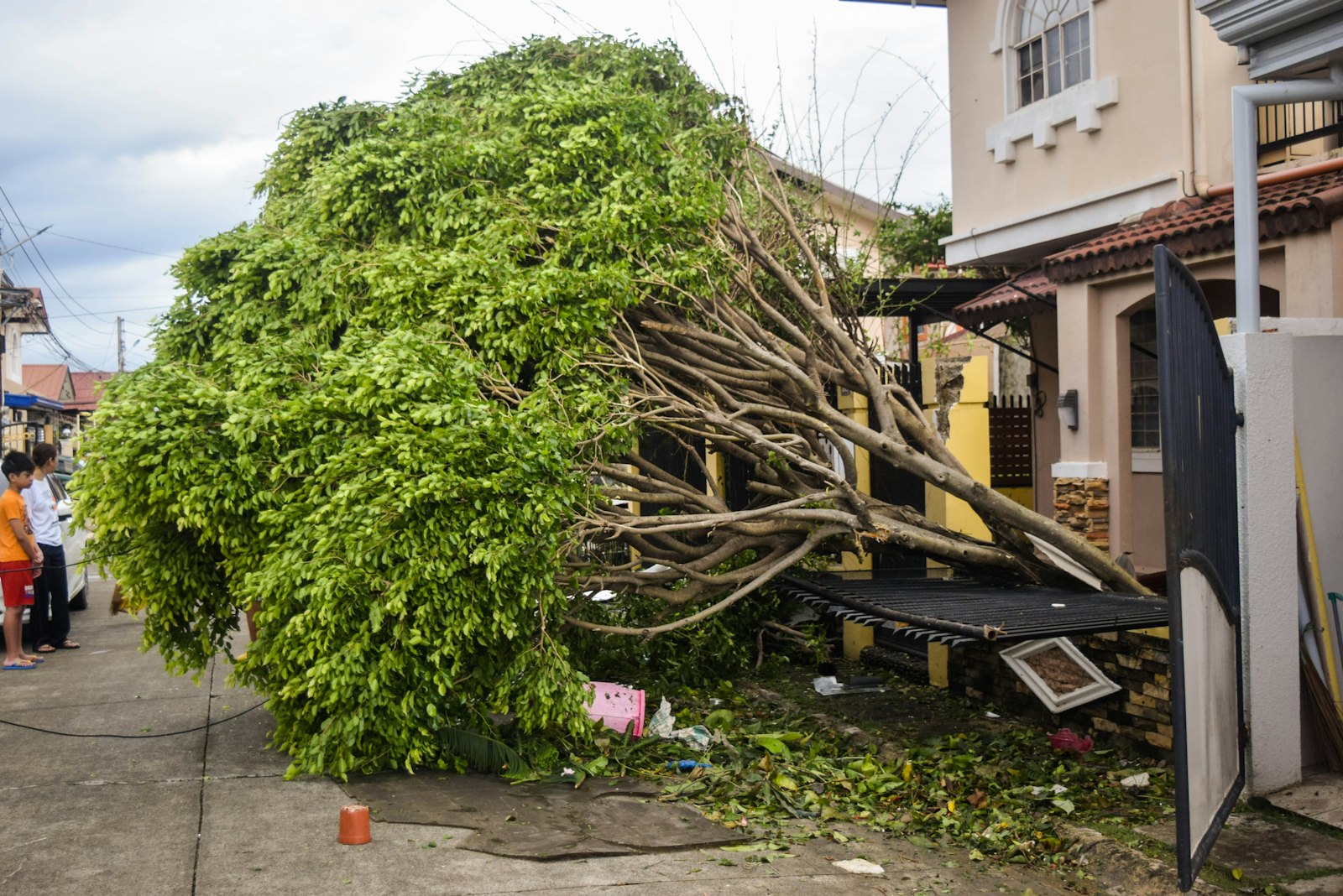
Reported impacts included one death, a man on Liuqiu Island in Taiwan killed by strong waves, and 616 people injured. Around 146,000 homes in Taiwan lost power and schools and workplaces closed. In Okinawa at least 8,400 households lost power, and Japanese airlines cancelled more than 160 flights.
What is the Geography behind it?
Tropical storms form over warm oceans, usually above about 26 to 27°C. Warm, moist air rises, cools and condenses, releasing heat that powers the storm. The Coriolis effect makes the system spin, and very low pressure at the centre is a sign of how much energy it holds.
Why was the death toll low? Two reasons stand out. Track: the strongest winds stayed largely offshore of Guam and east of Taiwan. Preparation: weather agencies issued warnings days ahead, and schools, workplaces and flights were stopped before the storm arrived.
How does this link to GCSE / A-Level Geography?
| Level | Where it can fit (check your child's specification) |
|---|---|
| GCSE AQA | Paper 1, "The challenge of natural hazards": tropical storms |
| GCSE Edexcel A | Paper 1, "Weather hazards and climate change" |
| GCSE Edexcel B | Paper 1, "Hazardous Earth": tropical cyclones |
| GCSE OCR B | "Global hazards": extreme weather |
| A-Level AQA | "Hazards": storm hazards |
How could this come up in an exam?
Questions often ask why the effects of tropical storms vary, or how far preparation reduces their impact. One style might be: "Evaluate the view that the level of development is the most important factor in the impact of a tropical storm."
Tip: strong answers compare two storms. Champi set against a high-death storm such as Typhoon Haiyan (Philippines, 2013) lets a student argue that strength alone does not decide impact; track, warning time and preparation matter too.
How can parents help at home?
- Draw it from memory. Ask your child to sketch how a tropical storm forms, then check it against their notes. Five minutes, twice a week, works better than an hour of rereading.
- Compare two storms. Ask them to name a storm they have studied and say how its impacts differed from Champi's, and why.
- Look at the track. Find Guam, Taiwan and Okinawa on a map and trace the path. Ask why a storm that stays at sea causes less harm.
Quick questions
What is the difference between a typhoon, a hurricane and a cyclone? They are the same type of storm. The name depends on the ocean: hurricanes in the Atlantic and north-east Pacific, typhoons in the north-west Pacific, cyclones in the Indian Ocean and South Pacific.
Does a stronger storm always cause more deaths? No. Impact depends on where the storm goes, how many people are exposed, and how well prepared they are. That is a key idea examiners look for.
For a UK comparison, see What can Storms Austen and Boelo teach my child about Geography?
To see how we teach these topics, visit our GCSE Geography classes or A-Level Geography classes pages.
Freya Ruparel is the founder of Olympus Geography, a Cambridge Geography graduate and taught Geography for eight years.
Sources
- Wikipedia, Typhoon Champi (2026), summarising agency and news reports
- Taipei Times, School, work canceled as typhoon nears (23 October 2026)
Join our classes for exam technique support
Free resources help, but marks come from practice with feedback. Our live classes teach exam technique every week, with a monthly examiner-marked assessment.
Related articles
…