
What can Storms Austen and Boelo teach my child about Geography?
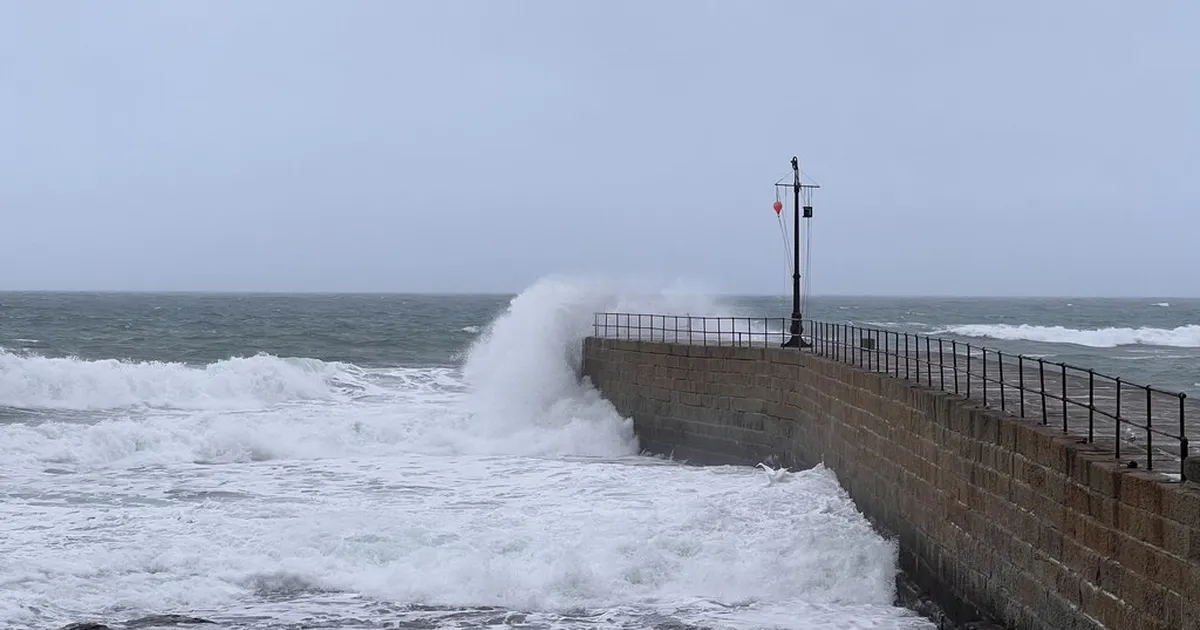
Storm Austen, the first named storm of the 2026/27 season, brought gusts of up to 76mph to south-west England and Wales on Friday 23 October, and Storm Boelo followed with amber wind warnings for Scotland and northern England. Both are real, current examples of Atlantic low-pressure systems, the weather hazards content in GCSE and A-Level Geography.
Freya Ruparel · 26 October 2026 · 4 min read · News
Last reviewed 26 October 2026
Key points
- Storm Austen (named 20 October) and Storm Boelo (the weekend of 24 to 25 October) were the first two named storms of the 2026/27 season.
- The Met Office described Austen as an area of low pressure that formed in the Atlantic and deepened rapidly, "invigorated by the jet stream".
- Weather hazards are in the major GCSE and A-Level specifications, so ten minutes of talking it through at home is useful revision.
What happened?
The Met Office named Storm Austen on Tuesday 20 October. It warned of disruptive wind and rain from late Thursday into Friday, with a yellow wind warning for southern England and south Wales. On Friday 23 October the Met Office recorded gusts of 76mph at St Mary's Airport in the Isles of Scilly, 74mph at Aberporth in Wales and 71mph at Culdrose in Cornwall. Rainfall of 20 to 30mm was forecast in many places, with more over high ground.
Storm Boelo followed straight away. Amber wind warnings covered mainland Scotland, parts of Northern Ireland and the far north of England for Saturday night and Sunday. The Met Office forecast gusts of 60 to 70mph widely in the amber area, and up to 80mph on exposed coasts. Yellow warnings reached further south, into England and north Wales, and covered the whole of Northern Ireland.
The Met Office also said unsettled weather was likely to continue into this week, especially in the north, before higher pressure could bring calmer conditions later on.
How does this link to GCSE / A-Level Geography?
Storms like Austen and Boelo are mid-latitude low-pressure systems, often called depressions. They form where warm, moist air meets colder air over the Atlantic, and the jet stream helps steer them and deepen them. That is the science behind the weather your child will meet in class.
| Level | Where it can fit (check your child's specification) |
|---|---|
| GCSE AQA | Paper 1, "The challenge of natural hazards": weather hazards and extreme weather in the UK |
| GCSE Edexcel A | Paper 1, "Weather hazards and climate change" |
| GCSE OCR B | "Global hazards": extreme weather |
| A-Level | Hazard and atmosphere content, and wider work on risk and how people respond to it |
Specifications differ, so the best guide is your child's own course. Their teacher or exercise book will show which board they are on.
How could this come up in an exam?
Exams could ask your child to explain the causes, effects or responses to an extreme weather event in the UK. A typical question style might be: "Using an example, explain the effects of an extreme weather event in the UK."
Tip: strong answers name the place, the date and one or two real figures, then link each effect back to a cause. "Gusts of 76mph on the Isles of Scilly" is more convincing than "very strong winds". Examiners also reward answers that mention how people prepared and responded, such as weather warnings.
How can parents help at home?
- Ask three questions over dinner. What causes a depression like this? Why do the strongest gusts hit exposed coasts and high ground? Who is most affected, and how do people prepare?
- Look at a Met Office warning map together. Ask your child to explain why the amber area for Boelo sat over Scotland and the north rather than the south.
- Make a five-line case study card. Name, date, places affected, two facts, and one response. It takes ten minutes and gives them a fresh example for mocks.
Ten minutes of talking it through is real revision, and it sticks better than re-reading notes.
Quick questions
Why do storms get names? The Met Office said Austen was named because of its potential for disruption. A name makes it easier for people to notice warnings and act on them.
Is a storm like Austen the same as a hurricane? No. Hurricanes are tropical storms that form over warm oceans. Austen and Boelo are mid-latitude depressions that form over the cooler North Atlantic. Both can bring damaging wind and rain, and students are often asked to compare them.
A calm next step
Stay safe, keep an eye on the Met Office warnings for your area, and use the stormy weather as a ten-minute chat rather than a revision session. Tomorrow we look at a slower hazard on the same coastlines: coastal erosion.
Freya Ruparel is the founder of Olympus Geography. She holds a BA and MA in Geography from the University of Cambridge and taught Geography full time for eight years.
Sources
- Met Office, Storm Austen named (20 October 2026)
- Met Office, Warnings in place as Storm Boelo to impact UK (23 October 2026, updated 24 October 2026)
Join our classes for exam technique support
Free resources help, but marks come from practice with feedback. Our live classes teach exam technique every week, with a monthly examiner-marked assessment.
Related articles
…