
Why is England still in drought in November?
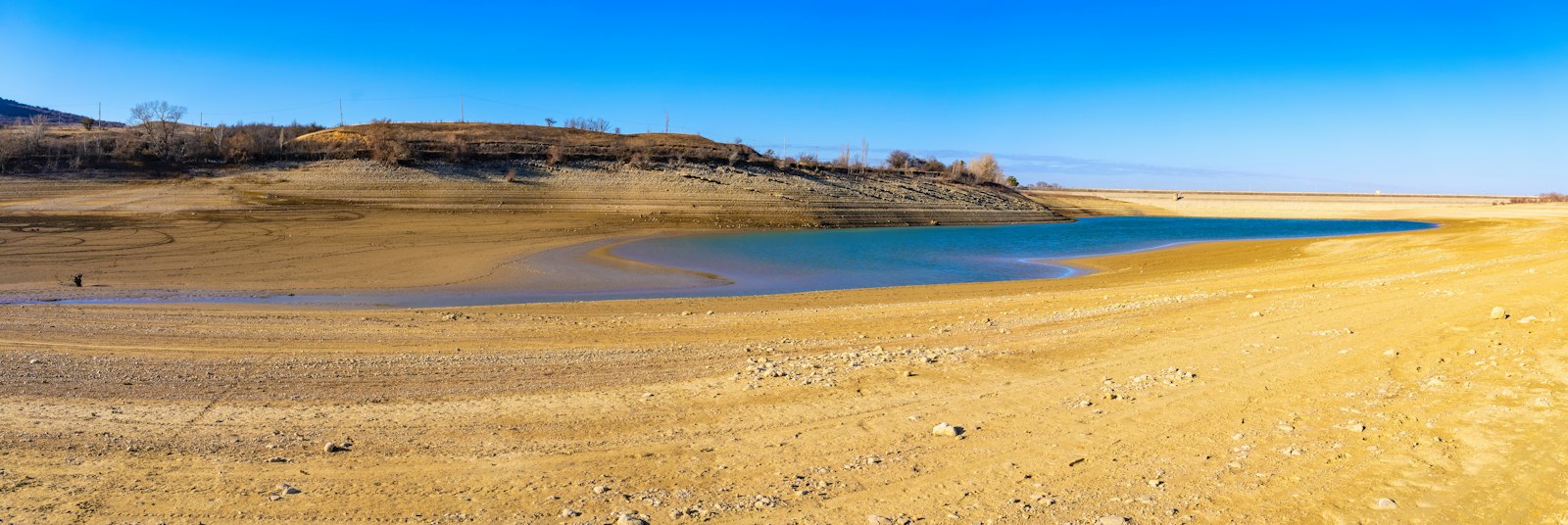
England's reservoirs were 60.1% full in early November. Why one wet month has not ended the drought, and what it means for Geography.
Freya Ruparel · 23 November 2026 · 2 min read · News
Last reviewed 16 November 2026
Key points
- England's reservoirs were 60.1% full on 3 November, 17% below average for the time of year, says the Environment Agency.
- October was wetter than average, but groundwater and reservoirs need months of rain to recover.
- The Environment Agency says England needs at least 120% of average rainfall over the next six months to be out of drought by spring.
What happened?
The Environment Agency's report for 30 October to 5 November found that river flows fell at all reporting sites and groundwater levels fell at most. Eight reservoirs or groups were exceptionally low, including Wimbleball, Colliford, Roadford, Ardingly, Hanningfield and Grafham Water. Parts of Devon and Cornwall, Wessex, the Solent and South Downs, and Kent and South London are in severe drought, and hosepipe bans remain across several water companies. There have been 425 drought and dry-weather environmental incidents in 2026 so far, more than the 380 recorded in 2022.
What is the Geography behind it?
Rain does not go straight into reservoirs and aquifers. After a dry summer, the soil soaks up the first rain (a soil moisture deficit). Only after that does water percolate down into groundwater stores like chalk aquifers, or run off into rivers. That is why one wet month, October at 112% of average, did not fix the problem.
How does this link to GCSE and A-Level Geography?
| Course | Where it fits |
|---|---|
| AQA GCSE | Paper 2, The challenge of resource management: water in the UK |
| Edexcel B GCSE | Consuming energy and water resources |
| A-Level (all boards) | Water and carbon cycles: stores, flows, drought |
Check your child's specification for the exact wording.
How could this come up in an exam?
One style might be: "Explain why water supply in the UK is under pressure." Tip: top answers combine physical reasons (rainfall, geology) with human ones (demand, population in the south east).
How can parents help at home?
- Draw the journey. Ask your child to sketch where rain goes after it falls: soil, groundwater, river, reservoir.
- Use real data. Look at the Environment Agency's weekly report together and pick out one number to explain.
- Past papers with mark schemes. Try one water-resources question and check it against the mark scheme together.
Quick questions
Did the wet October end the drought? No. The Environment Agency still reported drought status across much of England in early November.
What is a chalk aquifer? Porous chalk rock underground that stores water, supplying much of southern England.
Related: How bad is England's 2026 drought?
Written by Freya Ruparel, founder of Olympus Geography, Cambridge Geography graduate with 8 years of teaching experience.
Sources: Environment Agency via GOV.UK (6 Nov 2026); Smart Water Magazine (10 Nov 2026).
Join our classes for exam technique support
Free resources help, but marks come from practice with feedback. Our live classes teach exam technique every week, with a monthly examiner-marked assessment.
Related articles
…