
Why are almost all coral reefs at risk of collapse?
A new IUCN assessment says 96% of shallow-water coral reef ecosystems are Critically Endangered. Here is the Geography behind it.
Freya Ruparel · 3 November 2026 · 3 min read · News
Last reviewed 2 November 2026
Key points
- The IUCN's first global assessment of coral reef ecosystems rates 96% of shallow-water reefs as Critically Endangered, at extremely high risk of collapse by 2075.
- Heat stress from climate change is the most consistent threat; overfishing threatens 63% of reef ecosystems.
- The story covers cause, process and impact in one place, which is exactly how ecosystem questions are marked.
What happened?
On 22 October the International Union for Conservation of Nature (IUCN) published the first global assessment of coral reefs under its Red List of Ecosystems. More than 250 experts assessed 127 tropical and subtropical ecoregions, covering 188,362 km² of reef in more than 80 countries and territories.
- 96% of assessed shallow-water reef ecosystems are Critically Endangered.
- The Great Barrier Reef, the Coral Triangle, the Mesoamerican Barrier Reef System and the Red Sea reefs are all on that list.
- Reefs in the western Galápagos Islands are already classed as Collapsed, following the 1982 to 1983 El Niño.
- The assessment uses a middle-of-the-road climate scenario of 2.7°C warming by 2100. Based only on change seen over the past 50 years, 24% of reefs would be Critically Endangered rather than 96%.
What is the Geography behind it?
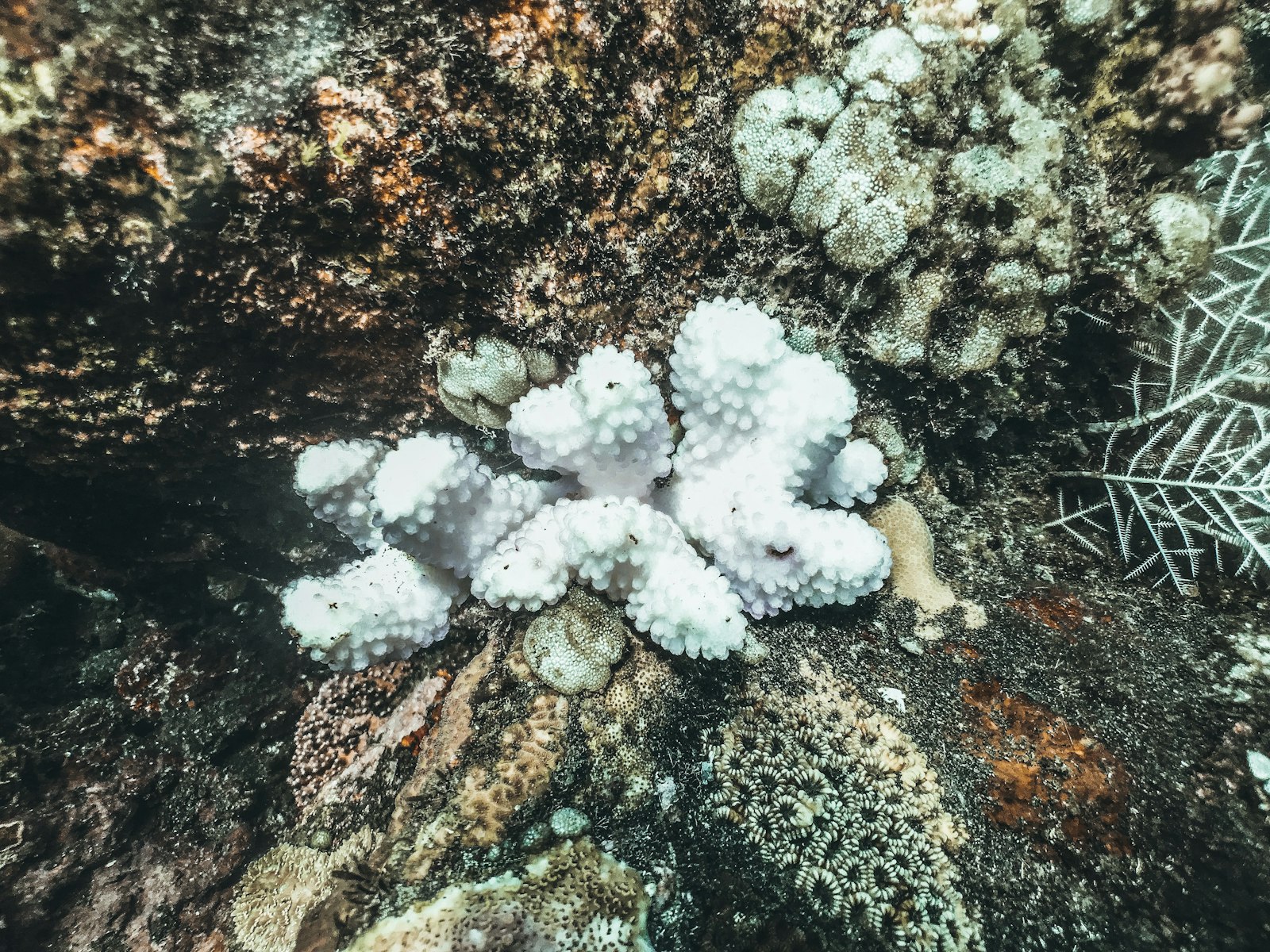
Corals live in partnership with tiny algae that live in their tissue and provide most of their food and colour. When the sea stays too warm for too long, the corals expel the algae and turn white. This is coral bleaching. If the heat lasts, the coral dies and the reef structure starts to break down.
Local pressures make recovery harder. Fish such as parrotfish keep seaweed under control; when they are overfished, seaweed can smother corals that are already stressed. That is why the IUCN counts both global and local threats.
How does this link to GCSE / A-Level Geography?
| Level | Where it can fit (check your child's specification) |
|---|---|
| GCSE AQA | Paper 1, "The living world": ecosystems and their value |
| GCSE Edexcel A | Paper 1, "Ecosystems, biodiversity and management" |
| GCSE Edexcel B | Paper 3, "People and the biosphere" |
| GCSE OCR B | "Sustaining ecosystems" |
| A-Level AQA | "Ecosystems under stress"; "Water and carbon cycles" |
| A-Level OCR | Geographical debate "Exploring oceans" |
How could this come up in an exam?
Questions often ask students to explain a threat to an ecosystem, or to assess how far human activity is to blame. One style might be: "Assess the extent to which climate change is the main threat to coral reef ecosystems."
Tip: a strong answer links three steps in a chain: rising sea temperature (cause), bleaching (process), and loss of fisheries, tourism and coastal protection (impact). It then weighs climate change against local factors such as overfishing, and reaches a clear judgement.
How can parents help at home?
- Ask for the chain. Can your child explain coral bleaching in three sentences: cause, process, impact? If so, they are ready for a 4 or 6 mark question.
- Find the reefs on a map. Locate the Great Barrier Reef, the Coral Triangle and the Red Sea. Ask what they have in common (warm, shallow, clear tropical water).
- Practise the judgement. Ask: "Is climate change or overfishing the bigger problem?" There is no single right answer, but there must be a reason.
Quick questions
Can bleached coral recover? Yes, if temperatures fall quickly enough and the algae return. Repeated or long heatwaves give corals less time to recover, which is why the trend matters.
Why should a UK student care about coral reefs? Reefs protect coastlines, support fisheries and tourism, and hold a large share of marine biodiversity. They are also one of the clearest examples of climate change affecting a whole ecosystem.
To see how we teach these topics, visit our GCSE Geography classes or A-Level Geography classes pages.
Freya Ruparel is the founder of Olympus Geography, a Cambridge Geography graduate and taught Geography for eight years.
Sources
- IUCN, Virtually all coral reef ecosystems face high risk of collapse in 50 years (22 October 2026)
Join our classes for exam technique support
Free resources help, but marks come from practice with feedback. Our live classes teach exam technique every week, with a monthly examiner-marked assessment.
Related articles
…