
Why are Nepal and Bhutan asking COP31 to focus on mountains?
COP31 opens in Antalya on 9 November. Nepal and Bhutan want a dedicated agenda item on 1.5°C warming in mountains. Here is why it matters.
Freya Ruparel · 7 November 2026 · 3 min read · News
Last reviewed 2 November 2026
Key points
- COP31, the UN climate conference, runs in Antalya, Türkiye, from 9 to 20 November 2026.
- Nepal and Bhutan have asked for a dedicated agenda item, "1.5°C Warming in Mountains", focused on the Hindu Kush Himalaya.
- Mountains supply freshwater to more than two billion people, so melting glaciers are a water, energy and hazard issue, not just a scenery one.
What happened?
Ahead of COP31, Nepal and Bhutan submitted a proposal for a new agenda item on warming in mountain regions, the Kathmandu Post reported on 1 November. It warns that rising temperatures threaten glaciers, biodiversity, water security, food systems, energy production and the livelihoods of millions of people.
The two countries are asking for:
- more research on what 1.5°C of warming, and overshooting it, means for mountains;
- an annual high-level dialogue on mountains and climate change;
- a dedicated UN Mountain Work Programme;
- mountain priorities built into climate finance and adaptation plans.
Nepal's submission cites its disaster authority's estimate that around $4.7 billion, about 10% of GDP, would be needed to rebuild after a flash flood triggered by a glacier collapse. In August, a glacier collapse on Langtang Lirung sent a flash flood down the Trishuli River.
What is the Geography behind it?
Mountain glaciers act as water towers. They store snow and ice in winter and release meltwater in summer, keeping rivers flowing in the dry season. As glaciers shrink, rivers can at first carry more water, then less, putting farming, drinking water and hydropower at risk.
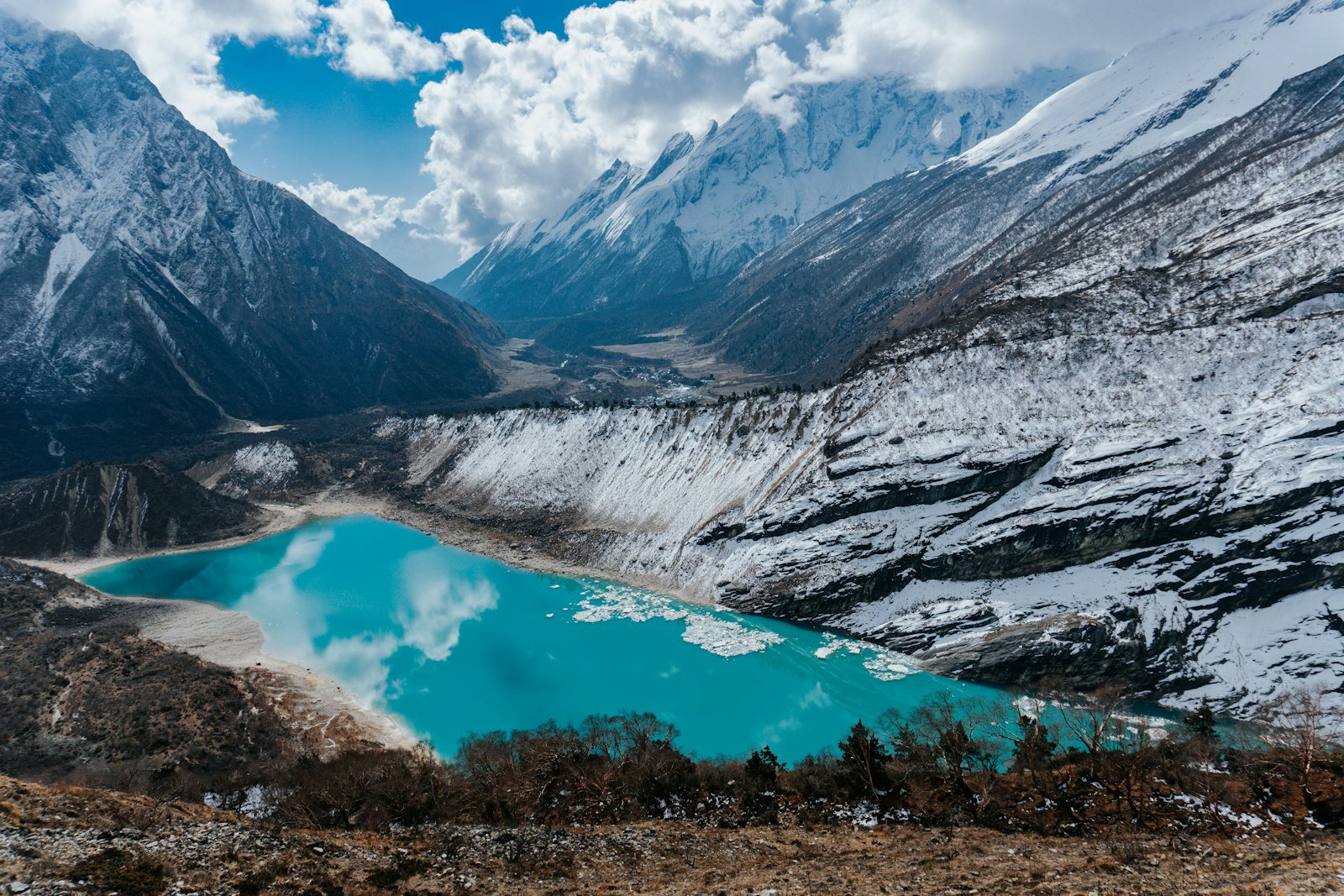
Melting also creates glacial lakes, often dammed by loose moraine. If the dam fails, the lake can empty in hours in a glacial lake outburst flood (GLOF), one of the most destructive mountain hazards.
How does this link to GCSE / A-Level Geography?
| Level | Where it can fit (check your child's specification) |
|---|---|
| GCSE AQA | Paper 1, "The challenge of natural hazards": climate change effects and responses |
| GCSE Edexcel A | Paper 1, "Weather hazards and climate change" |
| GCSE OCR B | "Changing climate" |
| A-Level AQA | "Glacial systems and landscapes"; "Water and carbon cycles"; "Global systems and global governance" |
| A-Level Edexcel | "Glaciated landscapes and change"; "The water cycle and water insecurity" |
| A-Level OCR | "Glaciated landscapes"; geographical debate "Climate change" |
How could this come up in an exam?
Questions often ask about the effects of climate change on glaciated environments, or how well international agreements work. One style might be: "Assess the threats posed by climate change to people living in glaciated mountain regions."
Tip: strong answers separate short-term and long-term effects (more meltwater now, less later) and link the physical change to people: water, food, energy and hazards.
How can parents help at home?
- Follow one COP31 story. Over the next two weeks, ask your child to pick one headline and say which Geography topic it belongs to.
- Ask the water question. Why would a farmer in India or Bangladesh care about a glacier in Nepal? The answer is rivers.
- Check the key terms. Can your child define mass balance, moraine and GLOF in one line each?
Quick questions
What is COP31? The 31st Conference of the Parties to the UN climate convention, where governments negotiate how to tackle climate change. COP31 is in Antalya, Türkiye.
What does "1.5°C" mean? It refers to the Paris Agreement aim of limiting global warming to 1.5°C above pre-industrial levels.
To see how we teach these topics, visit our GCSE Geography classes or A-Level Geography classes pages.
Freya Ruparel is the founder of Olympus Geography, a Cambridge Geography graduate and taught Geography for eight years.
Sources
- Kathmandu Post, Nepal and Bhutan propose dedicated COP31 agenda on 1.5°C warming in mountain regions (1 November 2026)
- United Nations, COP31 to take place 9 to 20 November 2026 in Antalya, Türkiye
Join our classes for exam technique support
Free resources help, but marks come from practice with feedback. Our live classes teach exam technique every week, with a monthly examiner-marked assessment.
Related articles
…